Taizo
Toyama
The Story
Higashiiwase in Toyama Prefecture flourished from the Edo period through to the Meiji period as the home to several Kitamae-bune shipping wholesalers. In the middle of its main street, next to the Important Cultural Property designated Kitamae-bune shipping wholesaler Moriya, is a gallery called Taizo Glass Gallery.
Taizo was born in Kobe in 1972. Upon hearing about the foundation of the Toyama Glass Art Institute in 1990, he was intrigued, despite being not particularly interested in glass. But he was curious about making things, and thought that if the school didn’t work out for him, he’d try a pottery program in Tajimi as backup. As an inaugural student at the Institute, Taizo had no senior glass artists to guide him, yet upon graduation in 1993, he was hired as a staff member at the Toyama Glass Studio, which only had a capacity of four.
Taizo established his own studio in 1997. Toyama had a thriving medicine selling culture of over 300 years, which led to the production of glass medicine bottles that became popular during the Meiji and Taisho periods, with many glass artisans at its peak. Taizo is today one of the few people helping promote Toyama’s glass culture, and passing on the skills to the next generation.
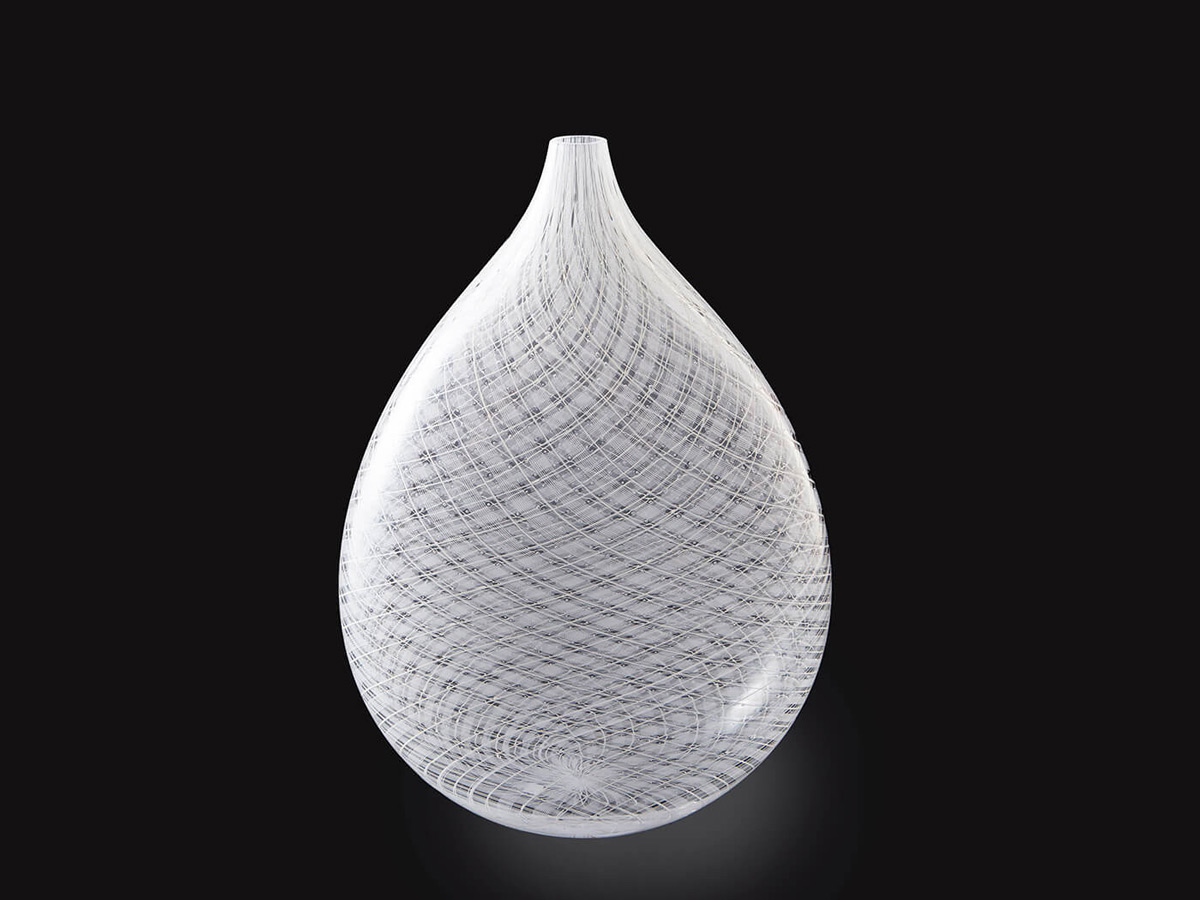
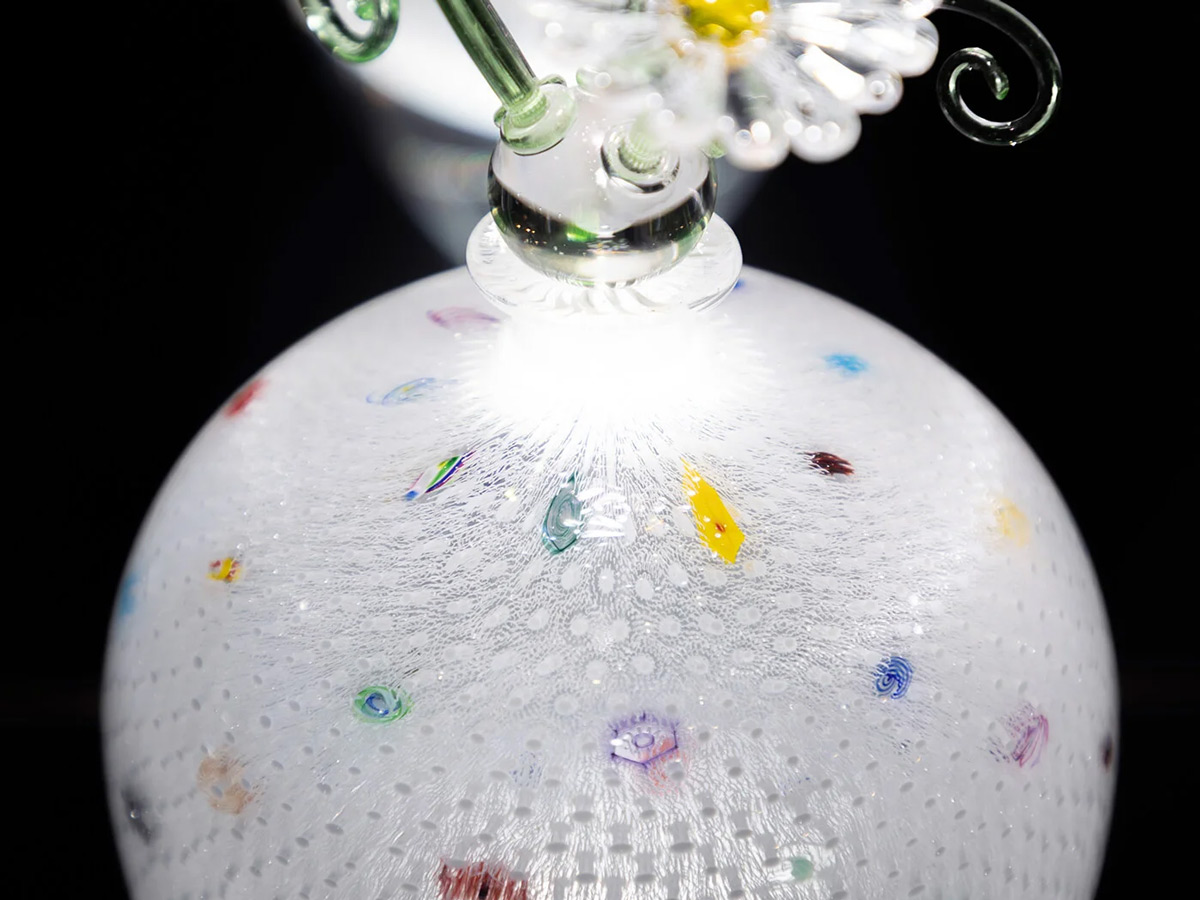
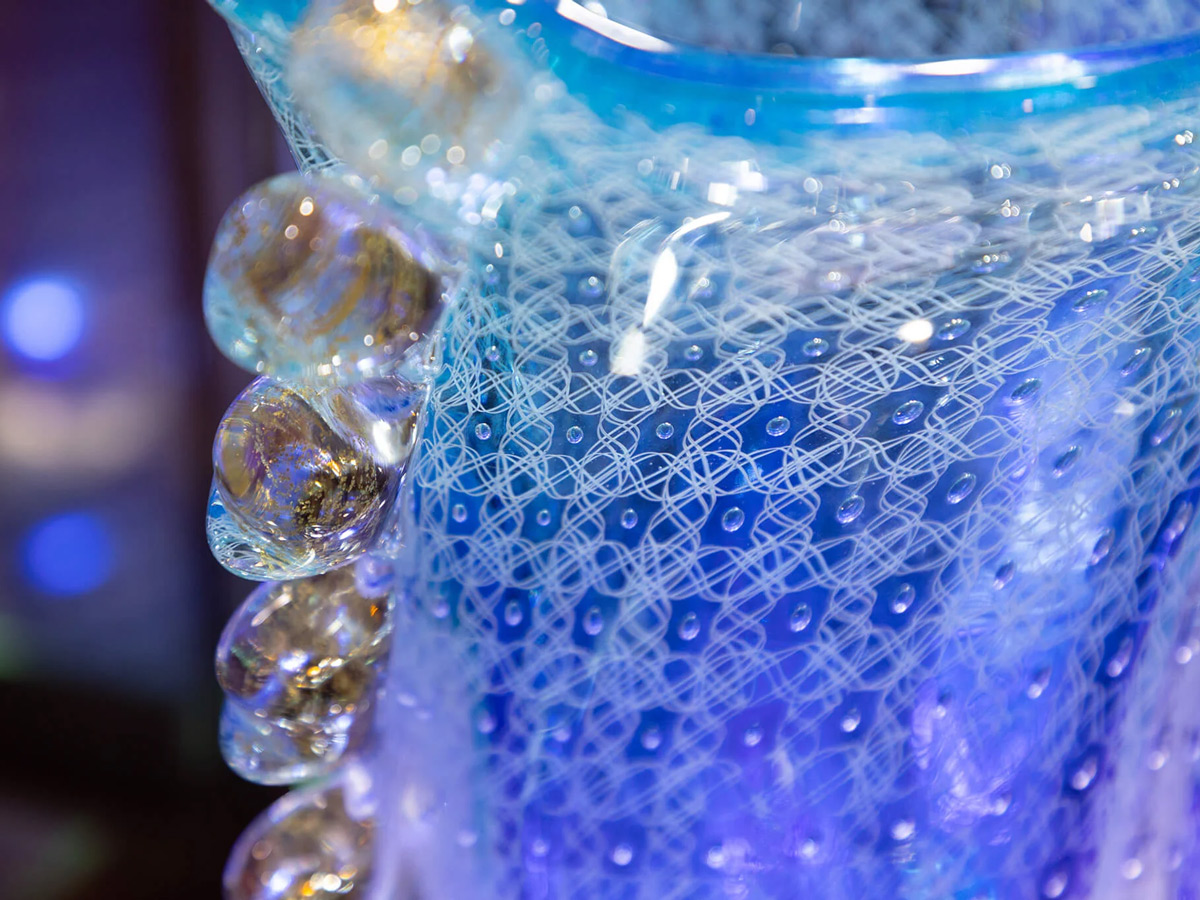
As Taizo himself received no techniques passed down from previous generations, all his creations are made by original methods. His glass is ingeniously crafted with original lace rods and bubbles of various sizes. Despite being in high demand, he abandoned the division of labor he had previously employed and now stands alone in front of his furnace, saying, “I want to work at my own pace to create works that I’m satisfied with.”
Taizo believes there is value in giving things a try, and continues to challenge himself with new designs and new techniques. “Like a chef, you don’t just stick to standard menus, but come up with new recipes depending on the season and ingredients. It’s only natural to hone your sensibilities and techniques depending on the creation you want to make.” Even if he creates a masterpiece that he wants to keep for himself, he makes it a point to “let go of the good stuff.” This is because he bears in mind the words of his mentor, who said, “If you don’t do this, you won’t be able to create anything better.” His constantly striving for greater heights underlies the desire to create something that will please anyone who picks it up.
The Craft
Taizo’s lace knitting patterns are made by stretching white glass wires very thinly, attaching them to the side of the clear glass, then twisting them to create the pattern. To make one type of lace rod, it is stretched as long as ten meters. The lines are arranged in a lattice pattern, and then an air bubble is placed between each lattice.
All metals have different melting points, so the melting temperature changes depending on the color Taizo wants to achieve. The metal melts to permeate the glass, producing its color. For example, putting iron powder into glass at 1400º C turns it green. Iron is green, pure gold is pink, and manganese oxide is purple. It’s easy with a single color, but combining multiple colors is a challenge worthy of only the finest craftsperson.
Selected works