Tsutomu
Toyama
The Story
Tsutomu was born in 1972 in Inami, Nanto City, Toyama Prefecture, a town that once flourished as a port of call for Kitamaebune ships. Inami remains a stronghold of wood carving culture, which traces its origins to the construction of the Inami Betsuin Zuisen-ji Temple in 1390.
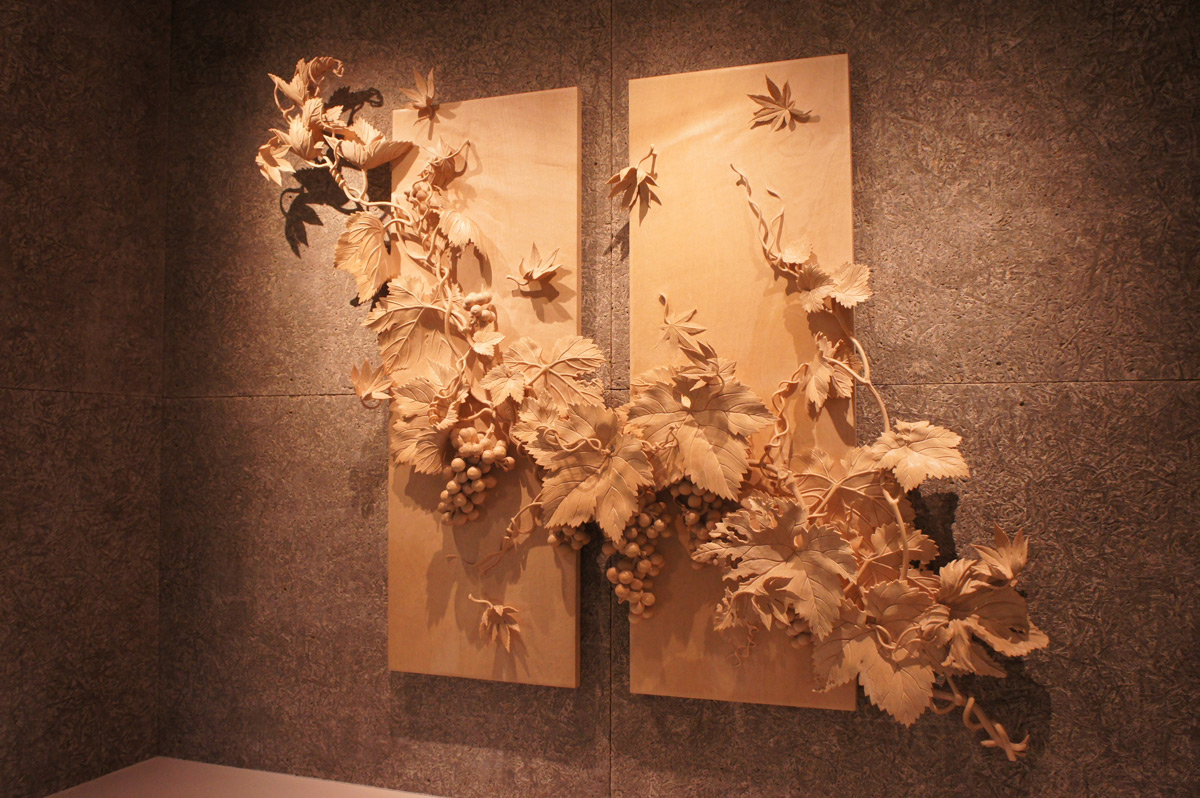
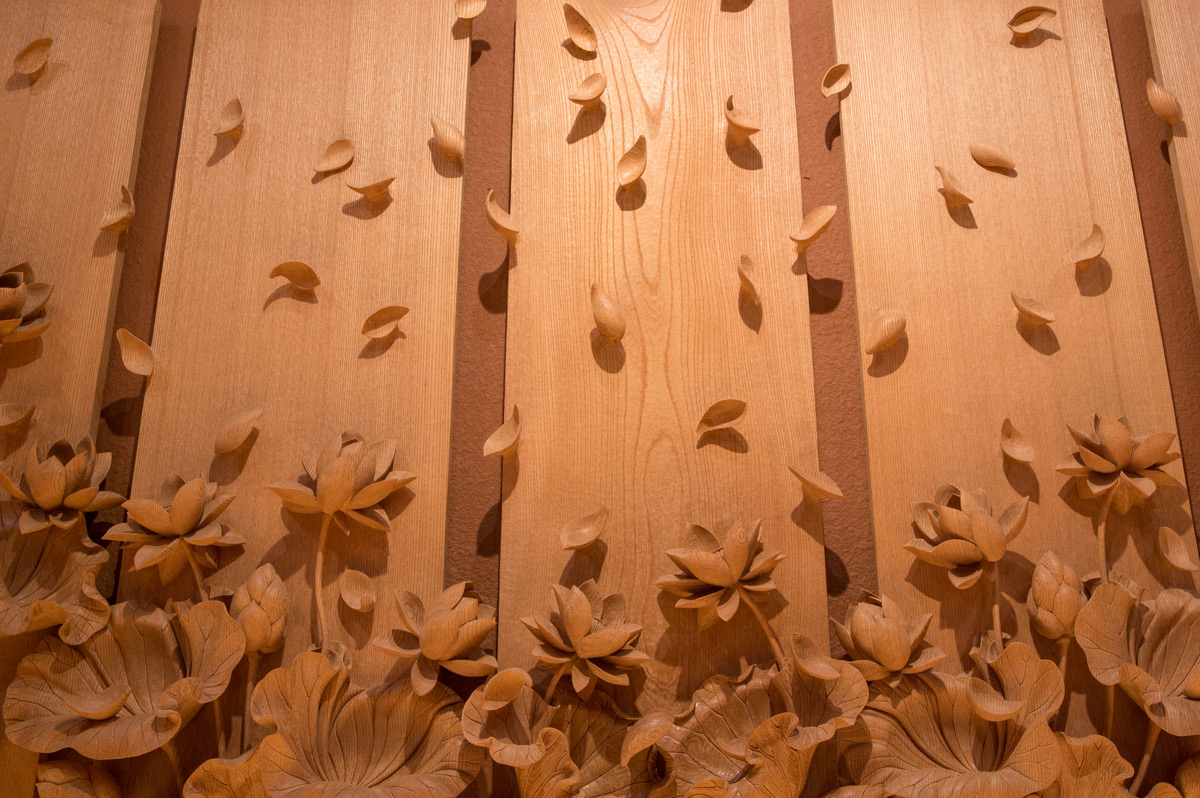
One of these traditional Inami sculptors was Tsutomu’s father, known for his carvings of ranma, the decorative wooden panels placed above sliding doors or between rooms. As Tsutomu had been holding a carving knife since the age of six years old, it was only natural that he would pursue a career in sculpture.
After graduating from the Department of Sculpture, Faculty of Art and Design at Musashino Art University in 1995, Tsutomu studied under both his father and sculptor Minami Tada, before going independent to pursue more realistic expression. He opened the studio, Wood Carving Iwasaki, in Toyama city’s Higashi Iwase-cho, and has since developed a unique worldview rooted in tradition. His work has garnered acclaim both domestically and internationally, including participation in the 2023 exhibition “Transcendental Craftsmanship: Toward the Future! Meiji Crafts and Their DNA.” Tsutomu has collaborated with local temples, Michelin-starred restaurants, and world-renowned watchmakers.
Tsutomu has always had a love for making things at a genetic level, but he believes the environment in which grew up is what led him to woodcarving. He takes as mentors the Meiji-era artists such as Takamura Koun and Ando Ryokuzan, who mastered realism, and feels that his biggest artistic challenge is to surpassing their Meiji era masterpieces.
In a similar spirit, Tsutomu’s greatest inspiration comes from past memories, and from tradition. Rather than creating new technologies, he instead wants to deepen his understanding of his own artistic heritage. He is dedicated to these time-worn production techniques and materials that enhance the character of a work over time, and allows the piece to mature.
The Craft
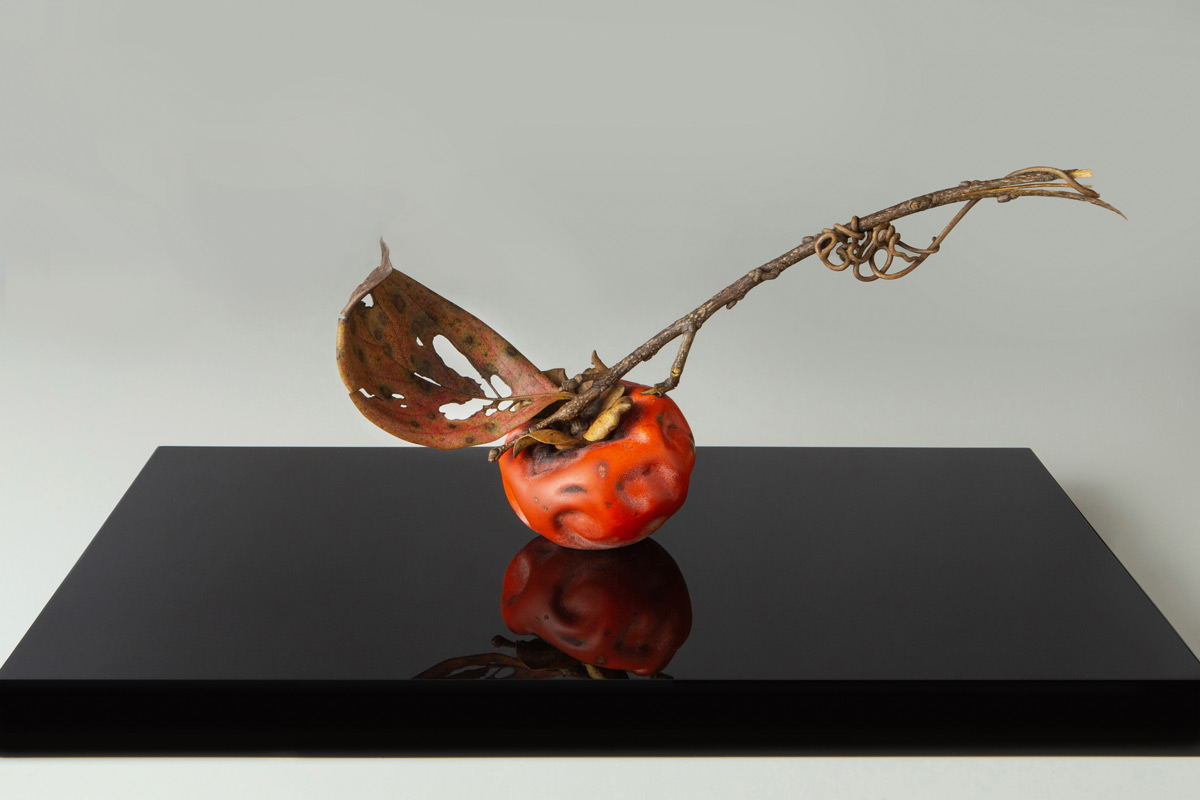
Tsutomu’s creative process begins with a three-dimensional clay sketch, and he takes ample time before moving on to the wood itself. Using the rather straightforward ichibokuzukuri technique, he carves the ornate details from a single piece of wood. Previously, he had mainly used a chisel-like finish in order to work in harmony with the grain of the wood, but about seven years ago, he began adding color to his works by commissioning coloring from Japanese painter Chikako Hirai, who then colors them through repeated exchanges. This elaborate process limits Tsutomu to produce only a few pieces per year, and enables the work to reflect his concept of the object produced, exuding a powerful realism that approaches the essence, a sense of time, and a profound artistic quality that transcends all of these.
Selected works