Hiroyuki
Ishikawa
The Story
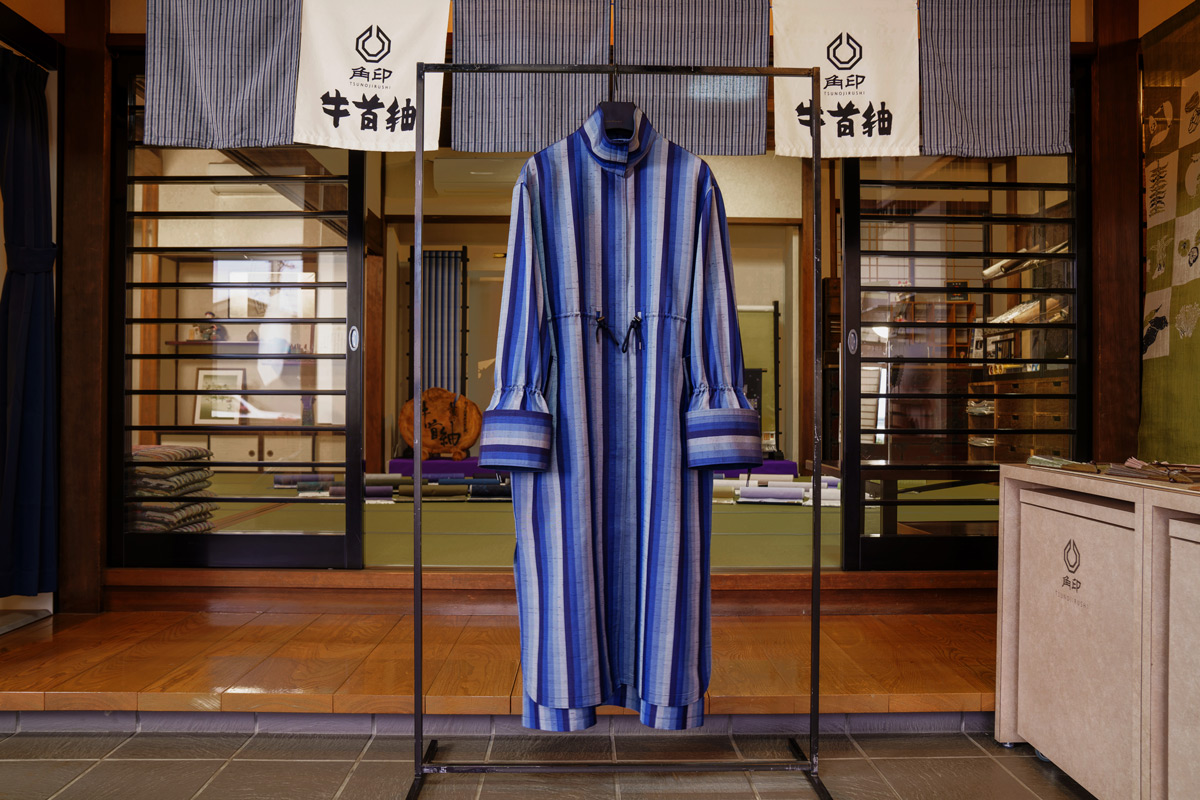
The Hakusan region is blessed with the natural bounty and historical culture of the sacred mountain Hakusan. The name of the local weaving technique Ushikubi Tsumugi comes from the former name of a village in the region’s Shiramine area. Legend has its origins being imparted by the wife and daughter of a warrior who fled to Ushikubi after being defeated in the Heiji Rebellion.
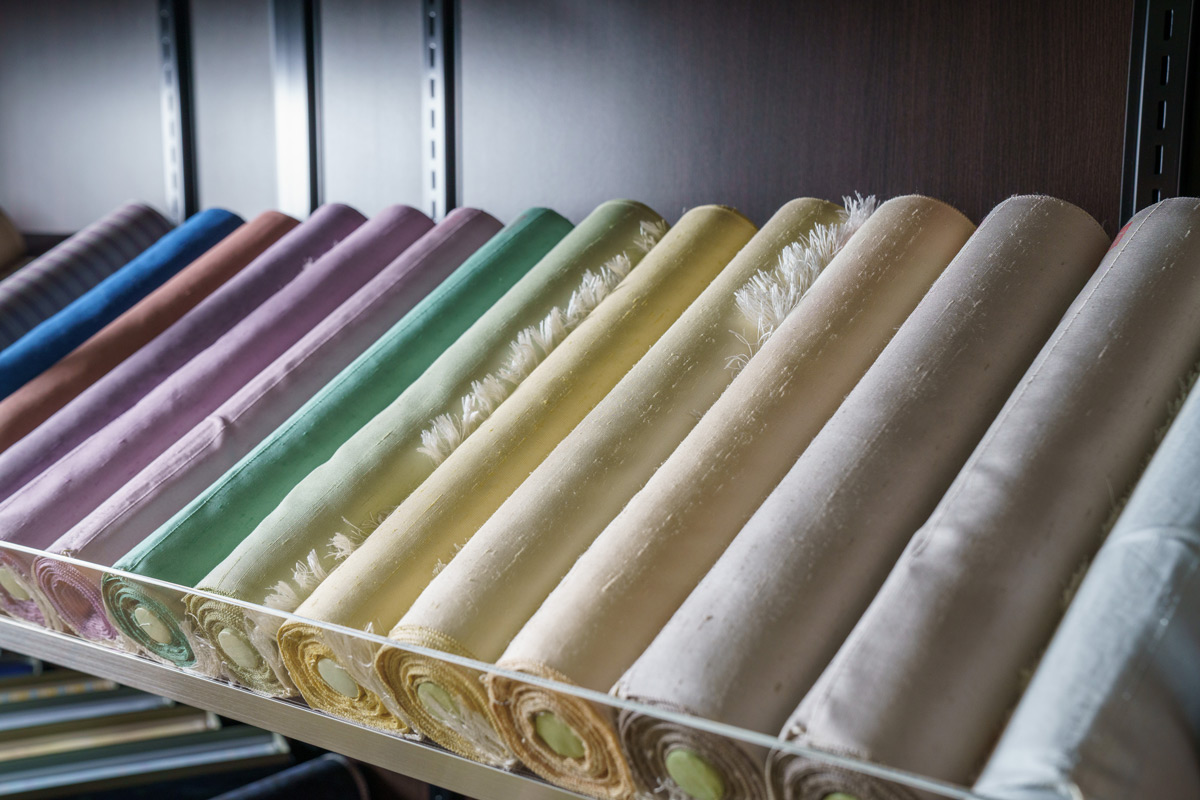
Due to the area’s limited arable land, a form of agriculture known as dezukuri was developed. Sericulture was therefore crucial as it provided a additional source of cash income. Only those cocoons that yielded raw silk were sold, among these being tamamayu, a cocoon made by two silkworms working together. Ushikubi Tsumugi was primarily woven from this ball of silk, a tradition passed down from generation to generation.
Hiroyuki is filled with affection for his roots in the foothills of Mt. Hakusan, and for the generations of people who have lived in the same environment. After graduating from university, he worked as a civil engineer for ten years before being asked to join the family weaving business. Since childhood, he had witnessed his father and brothers striving to revive the nearly lost tradition of Ushikubi Tsumugi, so he took on the work, wanting to contribute to its preservation and development.
Hand-spinning thread from raw silk cocoons was the most important technique, passed down from previous generations. Stability was quite limited due to hand looms, which resulted in inconsistent fabric texture. So shuttle looms were introduced to enhance stability, enabling the handling of intricate and more sophisticated dyeing techniques such as Edo komon and intricate yuzen patterns.
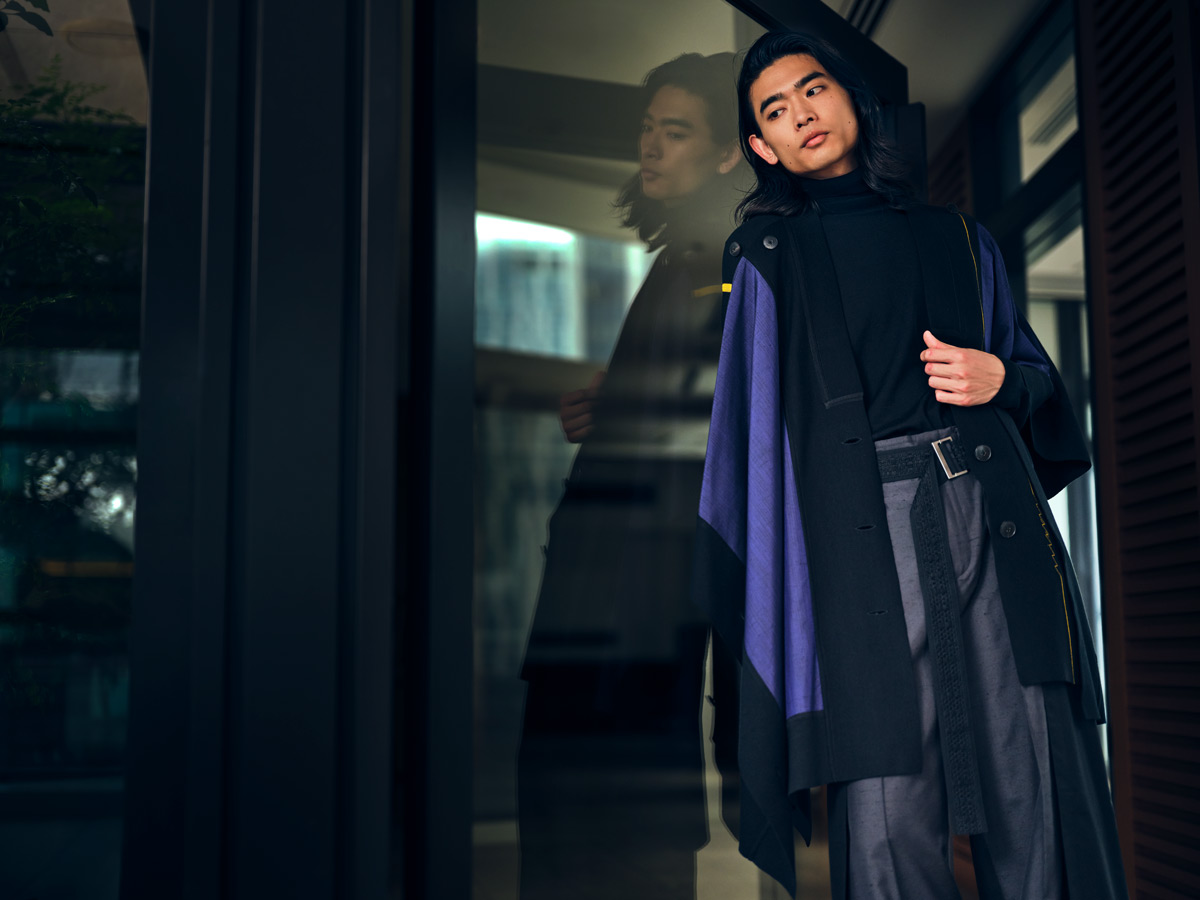
After becoming Representative Director and Senior Managing Director in 2004, Hiroyuki worked hard to increase sales of Ushikubi Tsumugi, which had been struggling due to the shrinking kimono market. Eventually embarking on an overseas expansion to open up new avenues, he was confident that the quality of Ushikubi Tsumugi would hold up even in the fashion capitals of the world. Meeting a designer who had previously worked for Hermès, this led to the creation of MIZEN, a clothing brand using traditional Japanese textiles. Thus Ushikubi Tsumugi was reborn as high-end clothing such as jackets and coats, expanding its possibilities as a fabric.
Hiroyuki follows consumer trends through various sources like television, magazines, and the web, striving to express the nature and culture of the region and apply it to meet customer needs. He intends to pass on Ushikubi Tsumugi as a healthy local industry to the next generation.
The Craft
For spinning thread, ball cocoons must be boiled with water from Mt. Hakusan, otherwise the high-quality thread that is characteristic of Ushikubi Tsumugi will not be produced. After boiling, the threads are drawn out and combined into a single raw silk strand of the required number of threads. The Hachō method is used to protect the raw silk from damage.
The spun thread is beaten to incorporate air, creating a lively, resilient yarn. Threads are dyed with plant-based dyes, then left untouched for six months to ensure the color sets. The threads are measured to the required number and length for the fabric and wound onto a warping beam. Tension and twill setting are adjusted during weaving to prevent thread slippage, and the threads are unwound from the wooden beam.
To achieve a beautiful weave texture, a two-shuttle box loom is employed. The weft yarns often exhibit uneven fineness, and the degree to which these irregular yarns are removed determines the fabric’s quality. During weaving, the weaver constantly monitors the yarn surface, carefully and firmly weaving each thread one by one. This process creates the unique texture characteristic of Ushikubi Tsumugi.
Selected works