Suguru
Okayama
The Story
Suguru creates indigo-dyed works and engages in activities to pass on Japan’s indigo culture to future generations. The old farmhouse in which he lives is nestled in the mountains of Okayama Prefecture, one of only a handful of households remaining in the village.
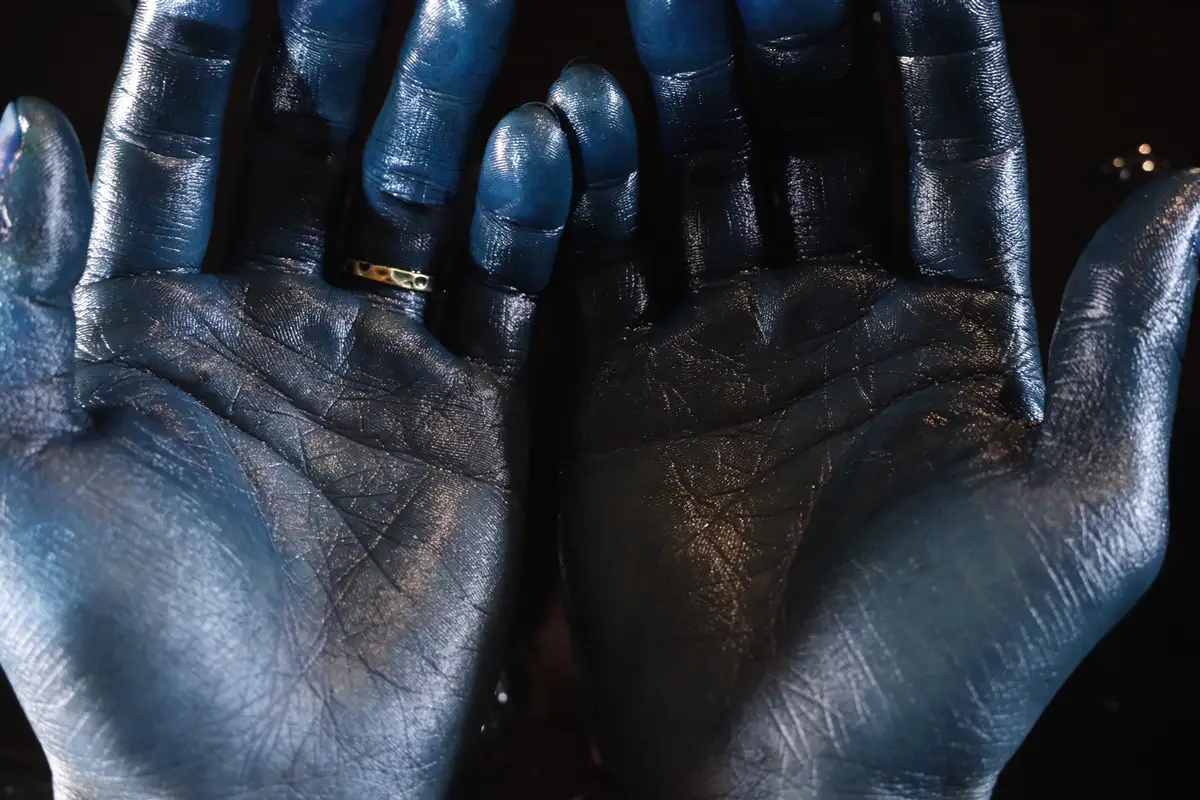
Born in Ome City, Tokyo in 1996, Suguru’s first encounter with indigo was in elementary school. The profound impression from that experience remains vividly etched in his mind, and the handkerchief he dyed then is still a cherished favorite, carefully preserved to this day. He encountered indigo dyeing again during his university years, at a time he was contemplating his own way of life and being. He found himself captivated by the uniquely Japanese process, from indigo cultivation to dyeing, the distinctive scent of the dye bath, and the magical time when the fabric visibly deepens in blue with each cycle of dyeing and oxidation.
During the COVID pandemic, navigating a stagnant social climate as a working adult, Suguru continually pondered what he wanted to do in the future. This led to a decision to dive into the world of indigo. He underwent three years of apprenticeship in Tokushima Prefecture, a major indigo-producing region, to learn the entire process: the cultivation methods for indigo plants and production of indigo paste, indigo vat preparation and dyeing methods, and dyeing techniques such as shibori and stencil dyeing. These skills were passed down over hundreds of years as his predecessors sought better methods.
After completing his apprenticeship, Suguru moved to the mountains of Okayama Prefecture and became independent, founding his studio, Rangei Saijitsu. Living with his family in a mountain cottage surrounded by wild plants, he pursues a life centered around indigo. There are various methods for indigo dyeing in Japan, but Suguru practices a traditional method called lye fermentation. Every day, he mixes the indigo liquid, monitors the state of fermentation, and checks the state of the bubbles known as indigo “flowers.” Every step is done by hand, requiring a delicate sense. While dyeing, he likes to be surrounded by the sounds of insects and birds, the rustling of leaves, and the wind, and just let his hands move without thought. Suguru feels that the color blue evokes images of rivers, oceans, the sky, and the universe, all things beyond human comprehension.
He hopes the beautiful art and culture of indigo, passed down by his predecessors, will take root in people’s hearts, nurture their spirits, and enrich their daily lives. For him, indigo is a precious gift, a blessing. He considers it his mission to pass on this beautiful culture to future generations, and pours his passion into educational activities and creative work dedicated to this purpose.
The Craft
The indigo dyeing process requires a long and careful process. In March or April, the seeds are sown, and by May the seedlings are planted, after they reach 10 to 20 centimeters. The harvest comes in mid-July when they reach thigh-height. The stems and leaves are separated, and only the leaves are dried. In November, December, the dried leaves are added with water and oxygen and left to ferment for several months to produce the sukumo dye. Furthermore, natural ingredients such as lye and bran are added to “build” the indigo, completing the indigo liquid.
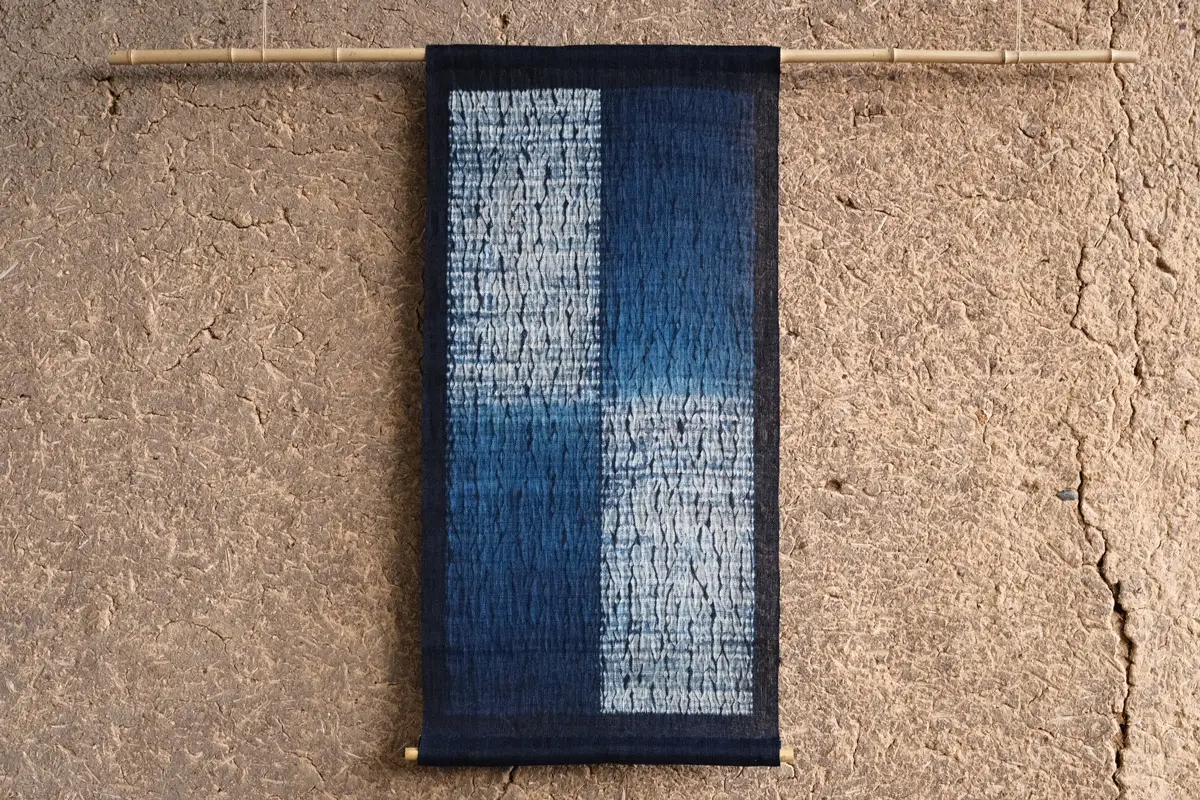
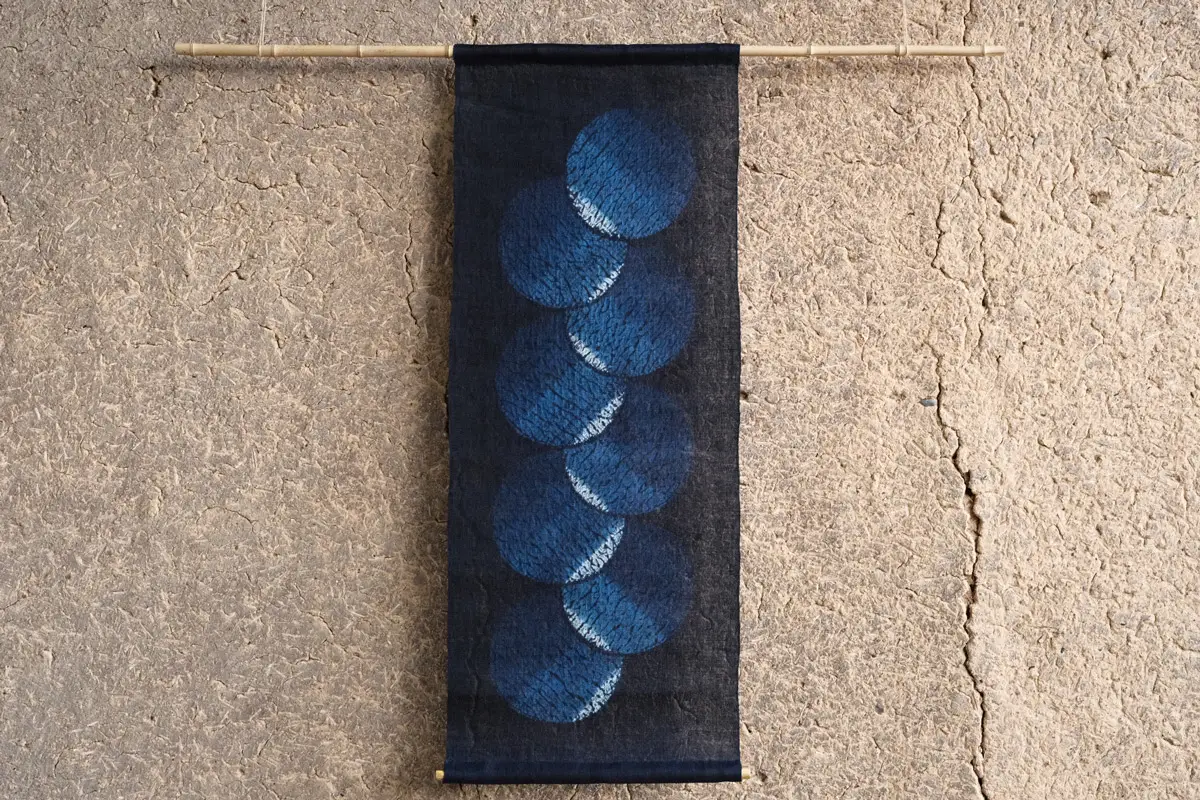
Selected works