Ryūki
Okayama
The Story
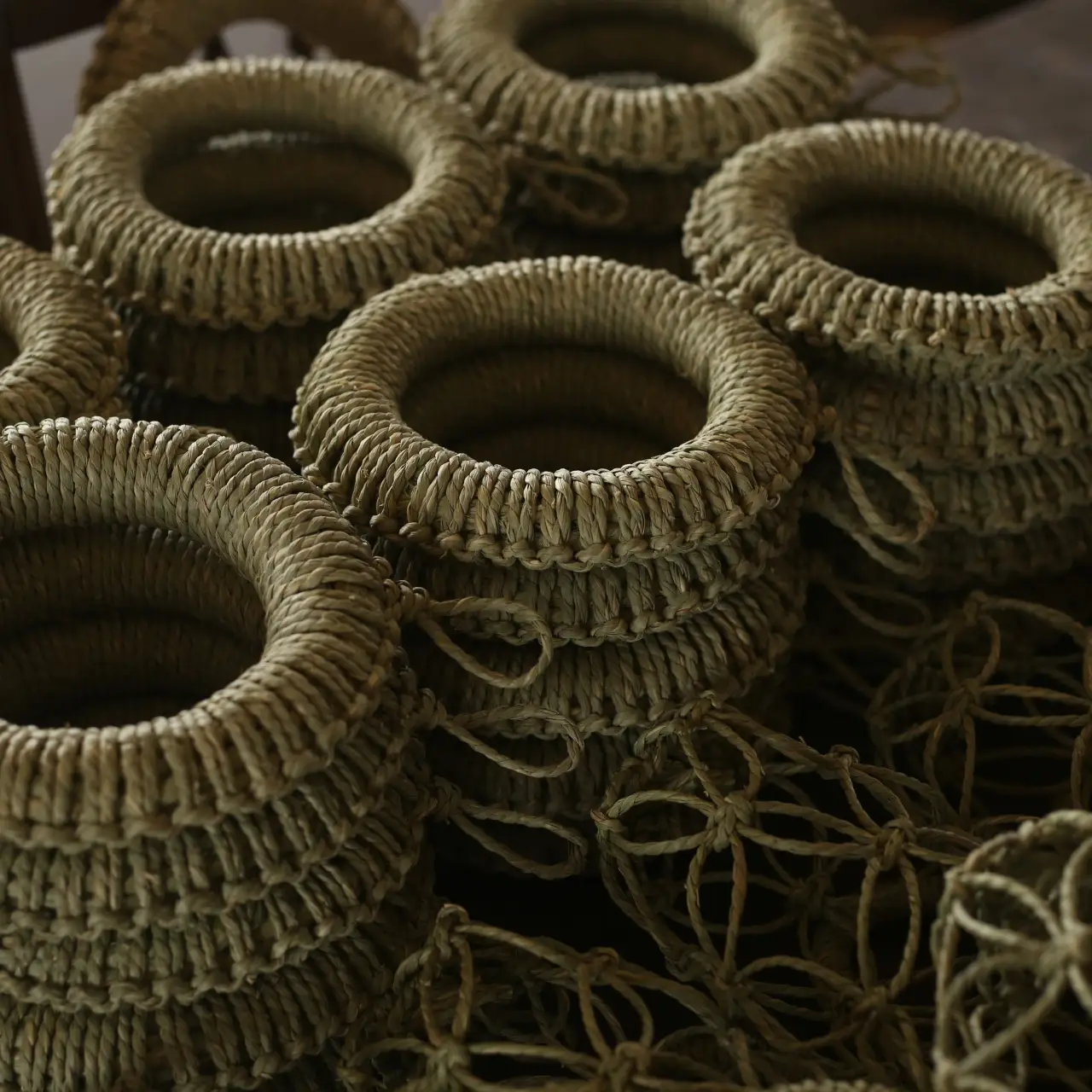
The plains of southern Okayama Prefecture are reclaimed land, and salt damage means that crops do not grow well. As a result, igusa rush grass was widely planted, leading to the development of an industry. Rush grass is primarily used for tatami mats, but in this region, dyeing techniques were established, and products made from rush grass woven into patterns became popular. Namely, igusa baskets were developed as a way to use the short rush grass that could not be used for tatami mats.
Ryūki was born in Okayama Prefecture in 1993. He is the fifth-generation head of Sunami Toru Shoten, a company founded in 1886 that manufactures mats in Kurashiki. After the death of his father, the fourth-generation head, the family business came to an end, as he was only in elementary school at the time. With his mother working, his grandmother kept the business alive, and Ryūki began helping with the farming and basket-making. He grew up watching her work, and was able to make baskets by the time he was in his late teens. When his grandmother retired, he decided to take over. After graduating from a vocational school in Okayama City when he was 20 years old, Sunami started making baskets professionally. He also serves as vice president of the Okayama Folk Crafts Association.
When Ryūki started working professionally he realized that as a child he had been able to make just one, but was unable to consistently mass-produce the same number of baskets as a product. He tries to work at his own pace, aiming to create baskets that live up to the values he has set for them. Igusa is a local specialty, and the baskets he makes are made with that in mind, trying honor as much as possible the methods that have been passed down, and the shapes that have been established over several generations.
Heavily influenced by displays in Kurashiki’s Mingei Museum, Ryūki hopes that he can create something that is comparable. He also takes inspiration from the way bags and other items he sees on the street are used, as well as their balance and size. While continuing to make the classics he would also like to try new designs. The varied means of using igusa, have disappeared, so he would like to revive these traditions as well. Their techniques and know-how have gone, but in working with igusa for a long time, Ryūki has a general sense how to make them.
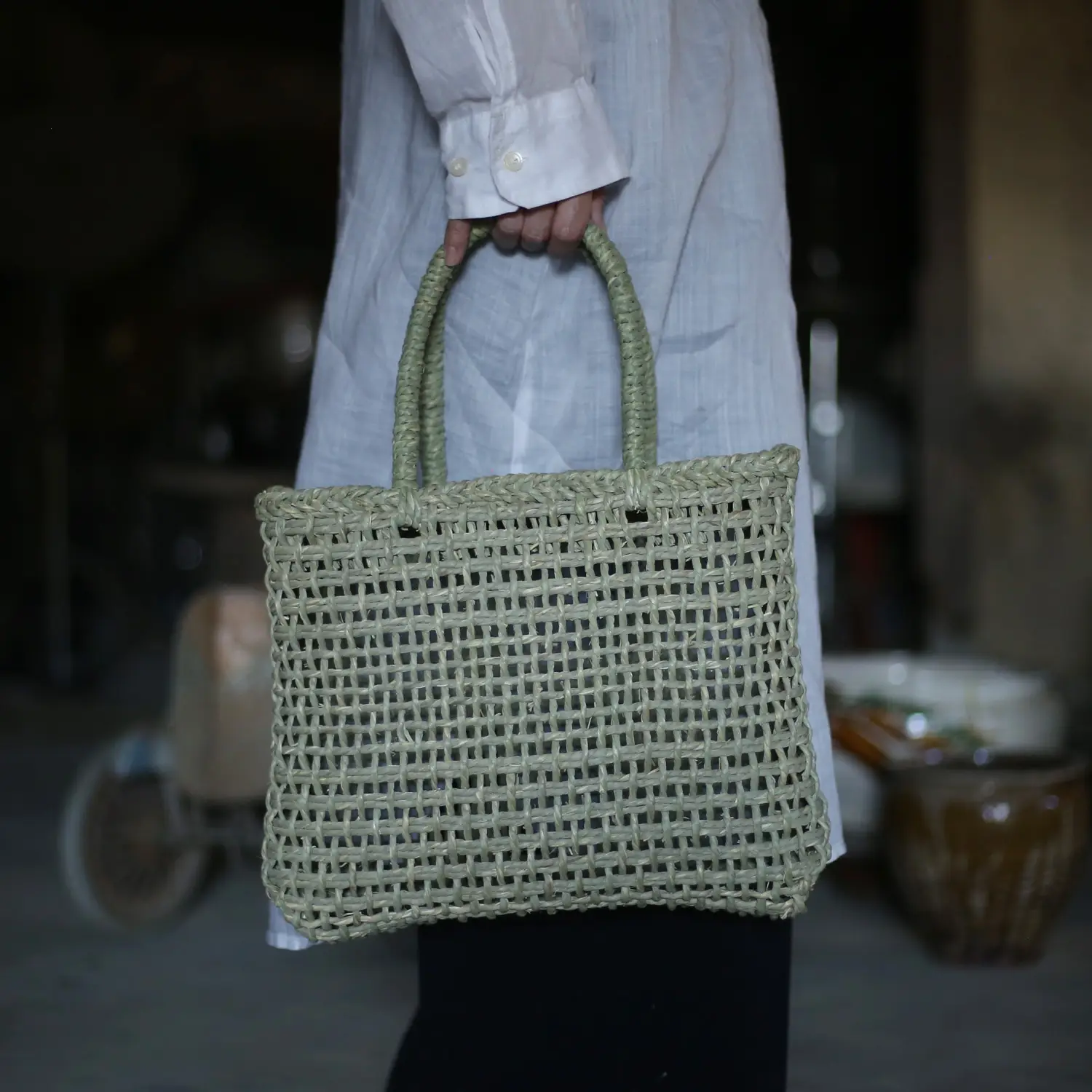
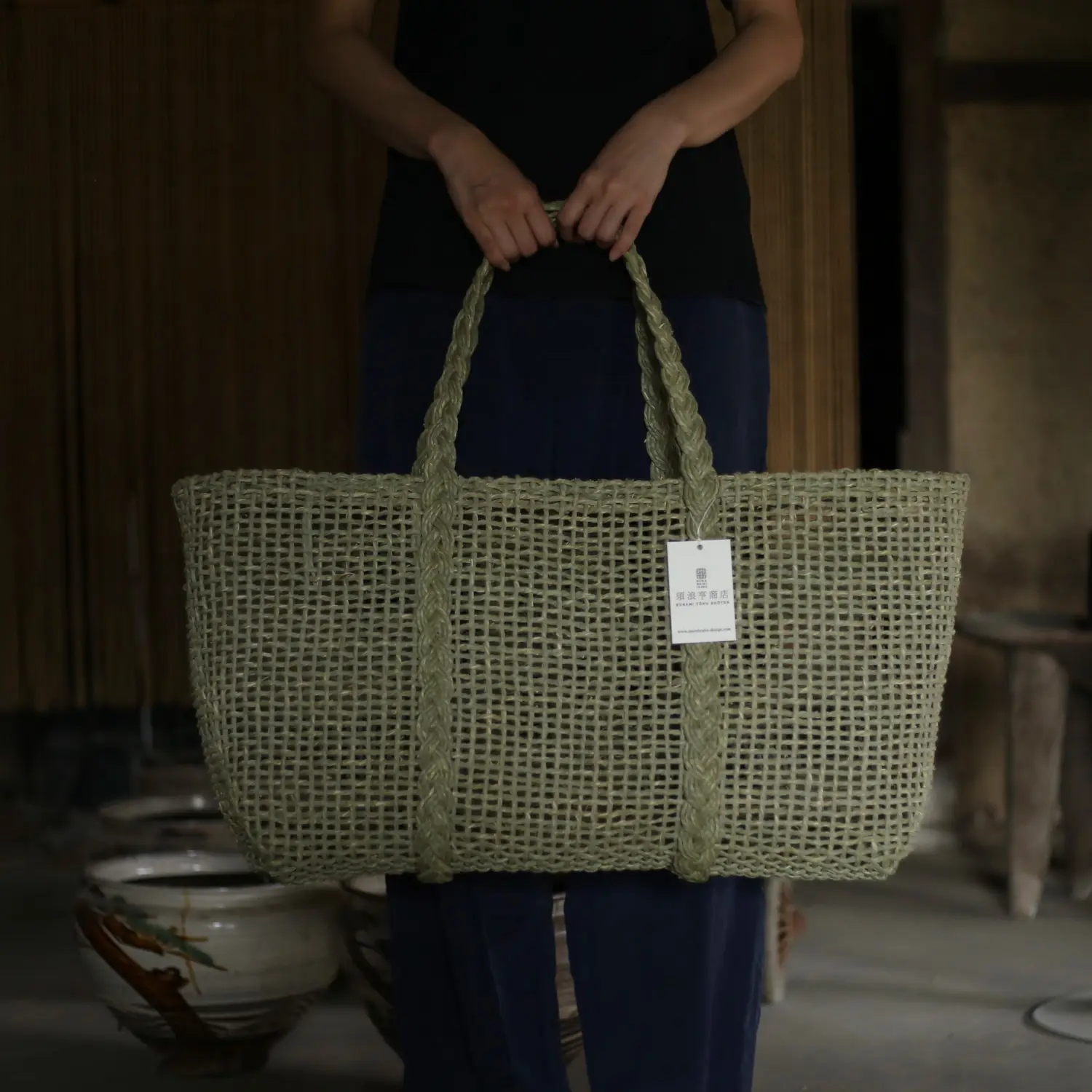
Ryūki is well-known for his ikago basket bags made from igusa, a popular item, with orders currently flooding in to the extent that he cannot keep up with production. He can only make a few baskets a day, and says that he has already almost decided on his shipping schedule for the current year. In addition to Japanese customers, about 10 to 20 percent of the customers are from overseas.
The Craft
With the exception of minor refinements, Ryūki pays close attention to his manufacturing methods, forming his products as closely to the original as possible, yet adjusting the size and shape to make something that is more suited to modern life. He keeps these new techniques separate from his standard products, but hopes to find a balance that is comparable to that of these standard products, as the latter become more refined over the course of many years of production.
Most of his igusa comes from Kumamoto prefecture, which he ships while still green and fragrant, so that it can be displayed in stores. He avoids exposing it to light and sunlight as much as possible, so that his products look greener than the handiwork of other igusa artisans.
Selected works