Yuichi
Tokyo
, Shinjuku
The Story
Hirose Dyeworks craftsmen have been practising the art of Edo komon for more than a century, ensuring the inheritance of their stencil dyeing trade through four generations. Founded in Shinjuku, where the clear waters of the Kanda River once supported a thriving dyeing industry, Hirose Dyeworks has carried the tradition from an era of everyday kimono to an age of global fashion, passing its techniques down in a way that honors tradition while leaving room for innovation.
The fourth-generation owner of Hirose Dyeworks, Yuichi, ended up at the dye vats by an unconventional route. A competitive windsurfer from the age of ten, he trained as a candidate for the Sydney Olympics before deciding to turn his ambitions toward the family craft business. An athlete’s instinct — to be the best in the world at what he does, or not do it at all — now drives everything he creates. The resulting body of work reaches well beyond classic kimono people expect to see Edo komon used on: in 2014, he took Edo komon to the Première Vision textile fair in Paris, and the Komon de Paris collection was born from a workshop at Paris’s École Nationale Supérieure des Arts Décoratifs, where students’ designs were dyed into brilliant scarves in collaboration with French designers.
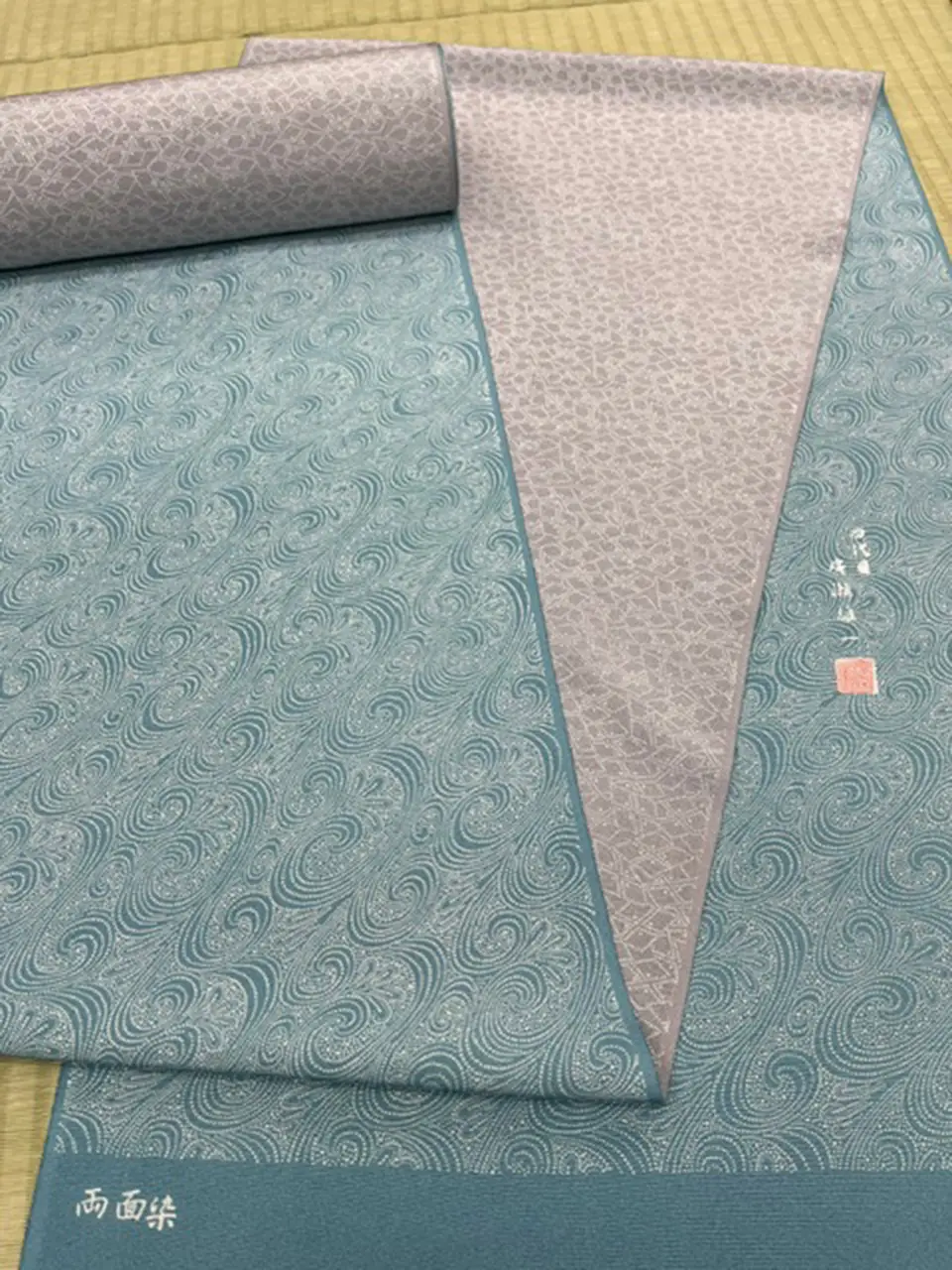
Yuichi’s guiding conviction is that the traditional techniques of Edo komon are what must be preserved; the designs, however, are something he feels we should be able to experiment with. “Designs can and should change — that is how the tradition gets a breath of fresh air,” he says. One thing that can never be replaced from the art is the unique yuragi, the infinitesimal tremble seen in lines drawn by human hands on dyed surfaces. In an age when AI is said to be capable of replicating even subtle work, Yuichi’s defense of handmade crafts is clear: it is not the trembling itself that matters, but knowing that a human being made it.
The Craft
The origins of Edo komon can be traced back to the Muromachi period (1336 – 1573), when fine stencilled patterns were first applied to samurai armour and formal dress. By the early Edo period (1603 – 1868) the technique had become essential to the production of kamishimo (stiff over-garments worn by samurai on official duties), and its technical demands grew accordingly. The finest patterns, when seen from a distance, read as a solid field of colour; only on close inspection do thousands of individually placed motifs emerge. By the mid-Edo period the merchant class had adopted the style as a subtle show of luxury and wealth, and what had been a mark of samurai status became the height of iki, the Edo aesthetic of restrained urban elegance.
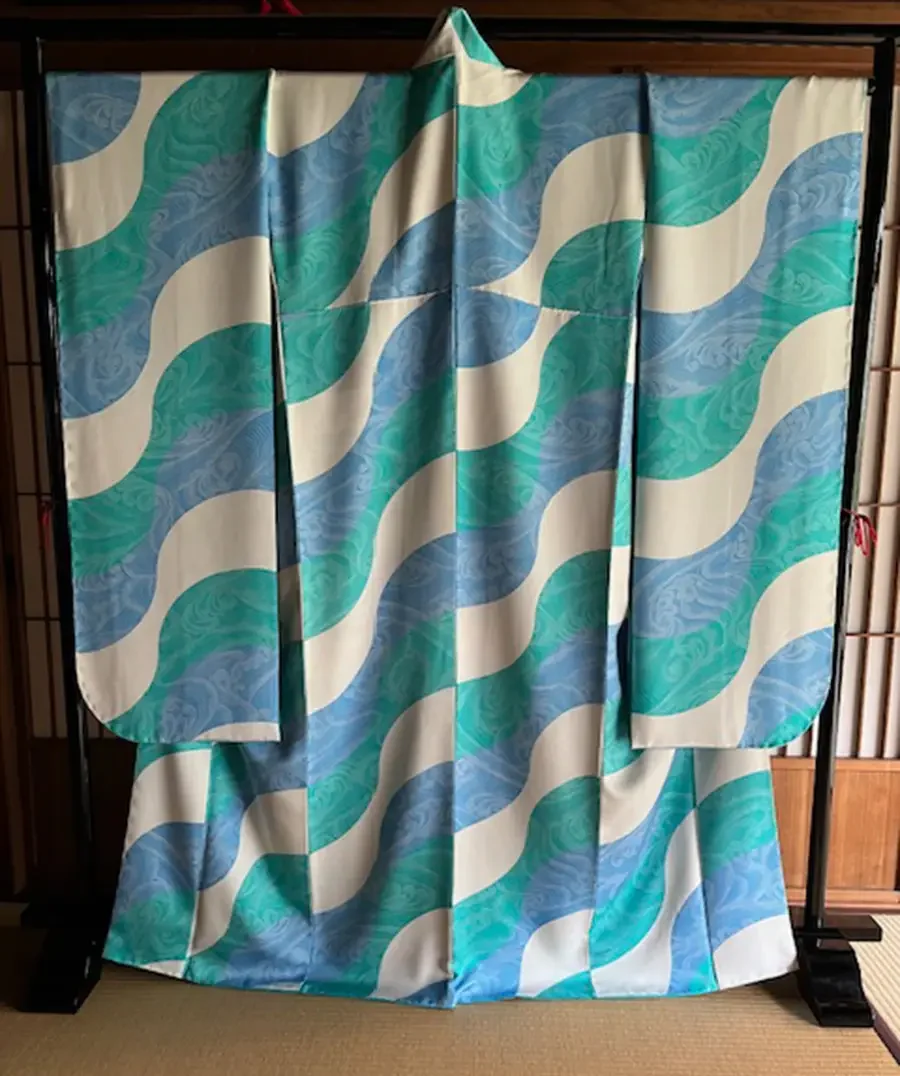
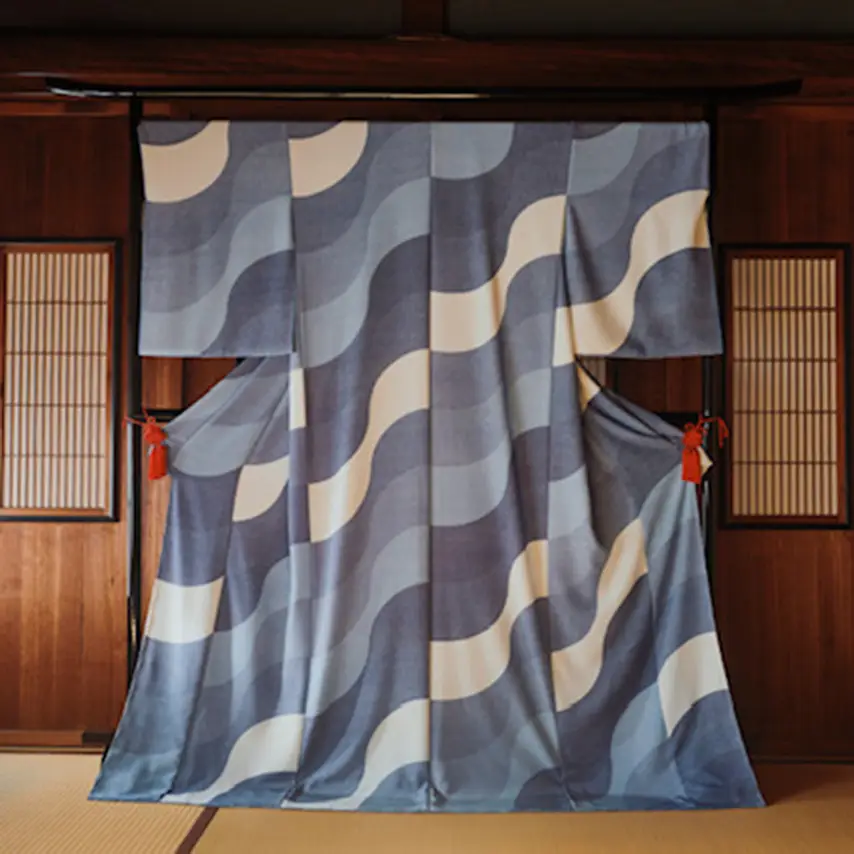
More than four hundred years on and the tradition is, in one sense, “complete”. The stencil-cutting techniques and resist-dyeing processes developed over centuries do not want for much improvement. What Yuichi has found creative room for is the application of those processes to entirely new surfaces and forms. The stole brand comment? (which in French sounds like “komon”), launched in 2011 to extend Edo komon patternwork to silk scarves and accessories designed for contemporary wardrobes. And the Naminori (“wave riding”) piece dyed to mark his daughter’s coming-of-age ceremony layers a classical wave pattern with an original drift ice design, producing something that is formally traditional and unmistakably personal… A textile made for a surfer by a craftsman who was once a surfer, in a language 400 years old.
Selected works