Yuki
Kyoto
The Story
Yokoyama Bamboo Products has preserved and pioneered Kyoto’s bamboo crafting culture for more than a century, beginning with its founding in 1919.
The family business is led by Yuki Yokoyama, who was taught by his grandfather to inherit company leadership at the young age of twenty-six. Before taking his current position, Yuki spent time studying in California after university, a transformative experience which broadened his perspective on different cultures and influenced his bamboo work in turn. For him, bamboo is more than a natural material; it is deeply connected to Japanese culture through tea ceremony, flower arrangement, archery, and other traditional arts. This transforms his role from a simple craftsman to one who helps carry cultural heritage into the future.
Yuki’s guiding philosophy is “continuity is strength.” He believes that preserving tradition and creating new possibilities both require continuous effort. Rather than simply protecting the past, he seeks to pass its knowledge and spirit on to the next generation.
The Craft
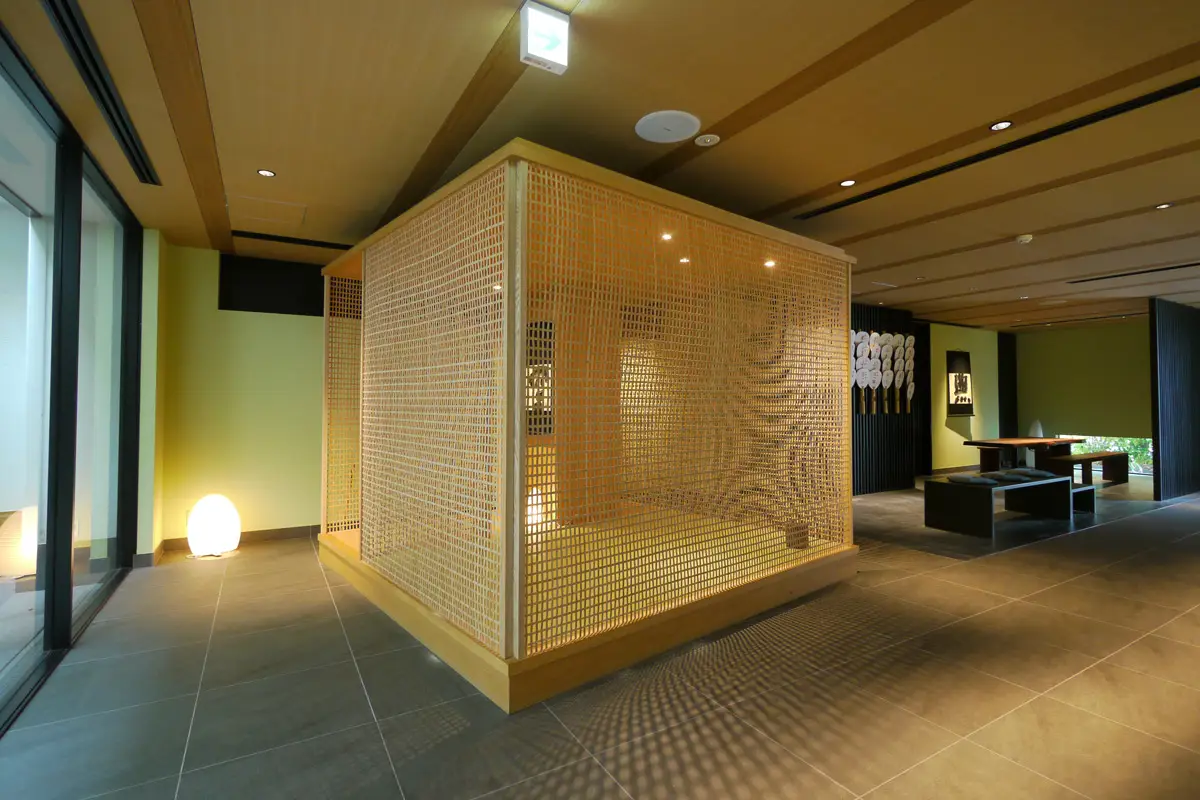
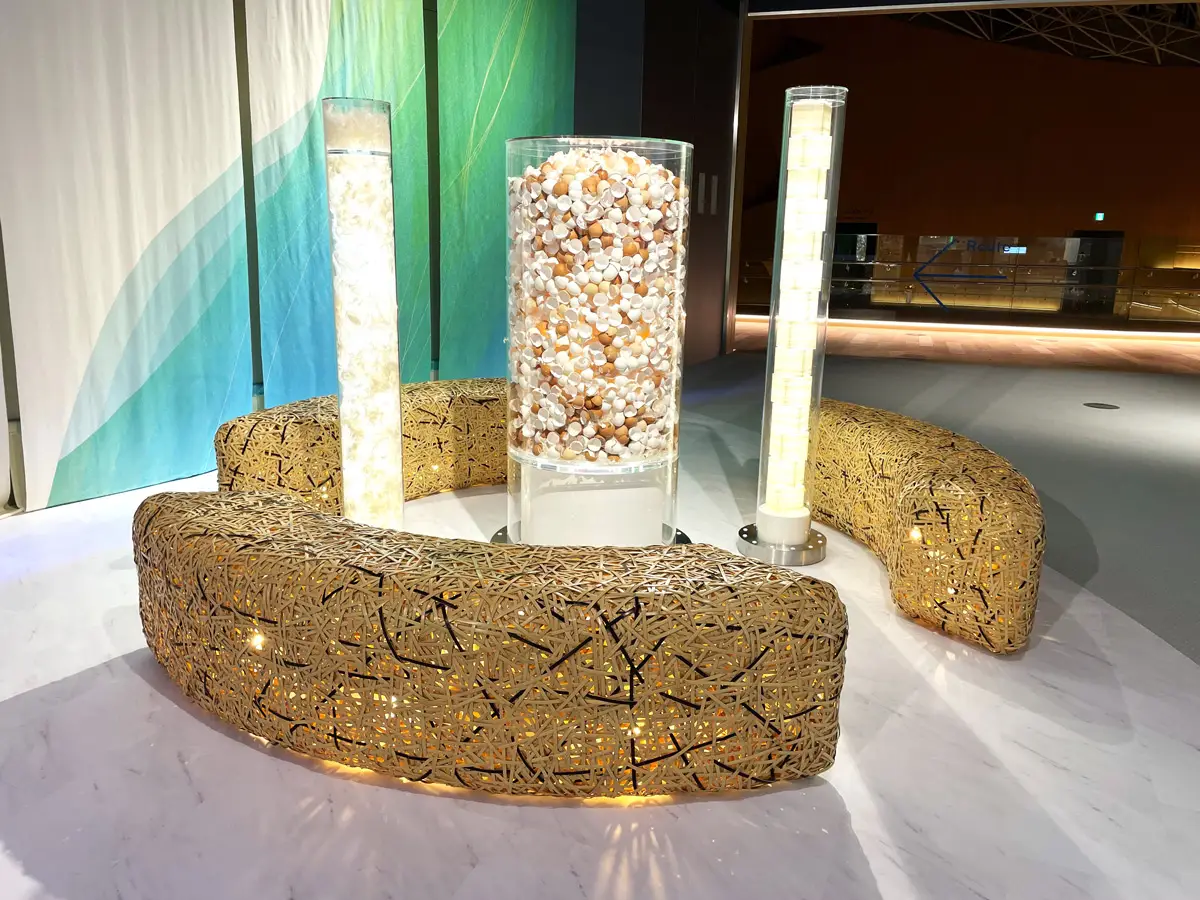
At the heart of Yokoyama Bamboo Products is Kyo-meichiku, Kyoto’s distinctive bamboo craft. Bamboo that has been carefully selected and processed by skilled craftsmen is transformed into architectural and decorative materials that showcase the natural color, grain, texture, and character of the natural material.
At Yokoyama Bamboo Products, they combine traditional craftsmanship with modern technology. Their work ranges from tea room features, garden decor, and bamboo fences to contemporary architecture and interior design items. It has also developed anti-mold and flame-retardant preservation treatments that expand the possible uses of bamboo in modern spaces.
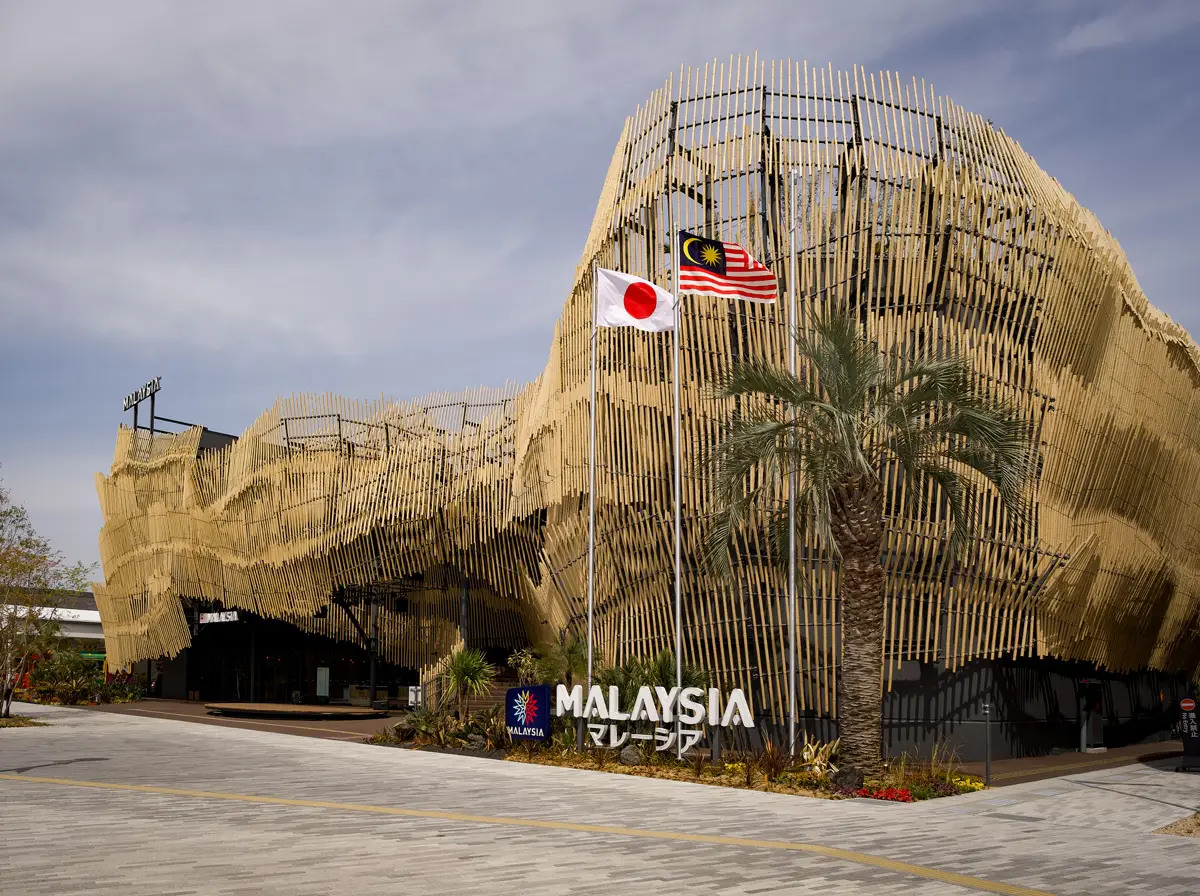
A major recent achievement was the choice of Kyo-meichiku for creating the Malaysia Pavilion at Expo 2025 Osaka, Kansai. The structure, designed by Kengo Kuma & Associates, utilized approximately 7,000 bamboo poles for the pavilion’s interior and exterior construction. For the exterior, around 5,000 poles were treated with Yokoyama’s unique preservation methods, allowing the bamboo to maintain its beauty while withstanding nearly a year of exposure to wind and rain.
Despite this achievement, preserving bamboo culture as a whole requires much more than developing new techniques or showcasing the result. From harvesting bamboo in the forest to processing, crafting, and installing, the tradition depends on many traditional and specialized skills and, above all, the people who practice them. Yuki considers his greatest mission to be nurturing the next generation of craftspeople, ensuring that Kyoto’s bamboo culture continues to evolve while remaining rooted in its traditions.
Selected works